
2025 Jira Testing Evolution: AI Velocity & Native Cloud Security
Explore 2025 Jira testing: AI, Forge security & Rovo. Get the 2026 outlook on QA automation, APIs & data mobility. Read the full quality engineering recap.

2025 has been a year of massive transformation for software quality, marking a shift from reactive, script-heavy testing to a proactive quality engineering model. This evolution was driven by the rapid maturation of Artificial Intelligence (AI) and its deep integration into every facet of the Software Development Life Cycle (SDLC). As teams manage increasingly complex microservices and high-velocity pipelines, testing has become an intelligent, pervasive layer that provides real-time insights rather than serving as a final checkpoint.
In the Atlassian ecosystem, this change is centered on the “Appification” of the Cloud. With the strategic move away from Data Center and the full embrace of Cloud-native infrastructure, Jira has solidified its position as the primary command center for orchestrating advanced quality workflows. With these shifts in mind, it is time to recap 2025 for test management in the Atlassian ecosystem and explore the innovations brought into this area of solution.
Securing the SDLC: Why Data Residency and Forge Matter
In 2025, the rise of Atlassian Guard Premium and Government Cloud emphasized that testing data - from environment credentials to intellectual property - is a primary asset requiring enterprise-grade protection. Therefore, security stopped being just an option and is now thought to be the foundation of modern test management.
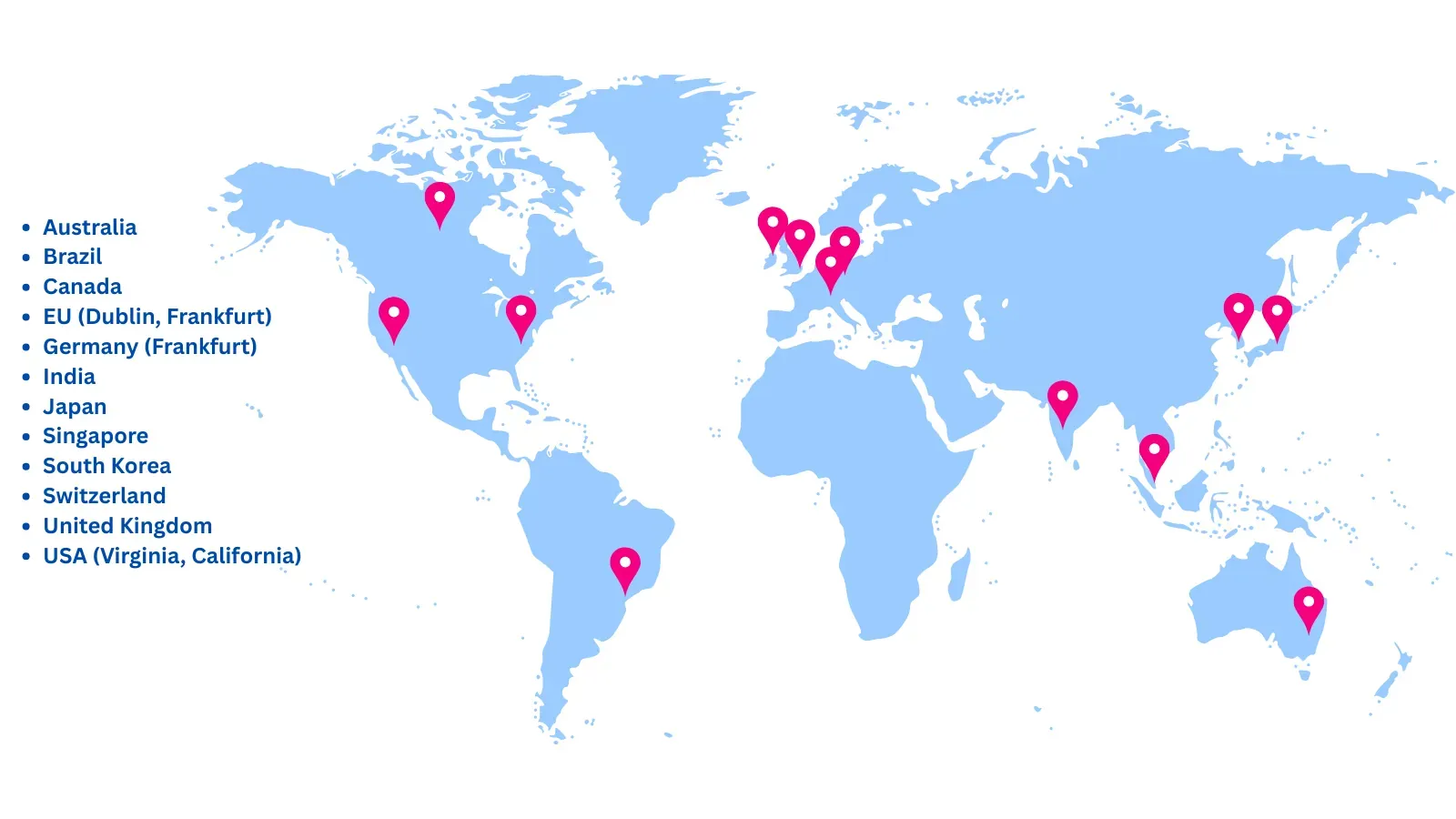
Global data residency via native Forge architecture.
The Forge platform addresses this challenge by hosting apps entirely on Atlassian’s serverless infrastructure, strictly controlling data egress so sensitive information remains within the Jira ecosystem. This architecture simplifies compliance with international regulations like GDPR because Forge apps can match the host Jira product’s data residency settings. For a deeper look at this area, the article Understanding Compliance in Data Residency explores how these solutions ensure data meets local regulations.
Appsvio Test Management (ATM) pioneered this approach as the first fully Forge-based test management tool. Its participation in the Cloud Fortified and Runs on Atlassian programs provides a clear sign of data safety, proving the tool meets rigorous security and reliability standards. In the Cloud era, meeting these residency and safety requirements is essential for any high-stakes testing project.
The Intelligence Leap: AI & Atlassian Rovo
AI is eliminating traditional bottlenecks, allowing the testing stage to keep pace with rapid development. The centerpiece of Atlassian’s 2025 strategy is Rovo, an AI-powered teammate designed to search across silos, learn from historical data, and act on testing tasks. This transition is explored further in How Atlassian Rovo and AI redefine the Software Lifecycle in Jira. To see Rovo in action throughout the key stages of SDLC, see the webinar co-hosted with Atlassian.
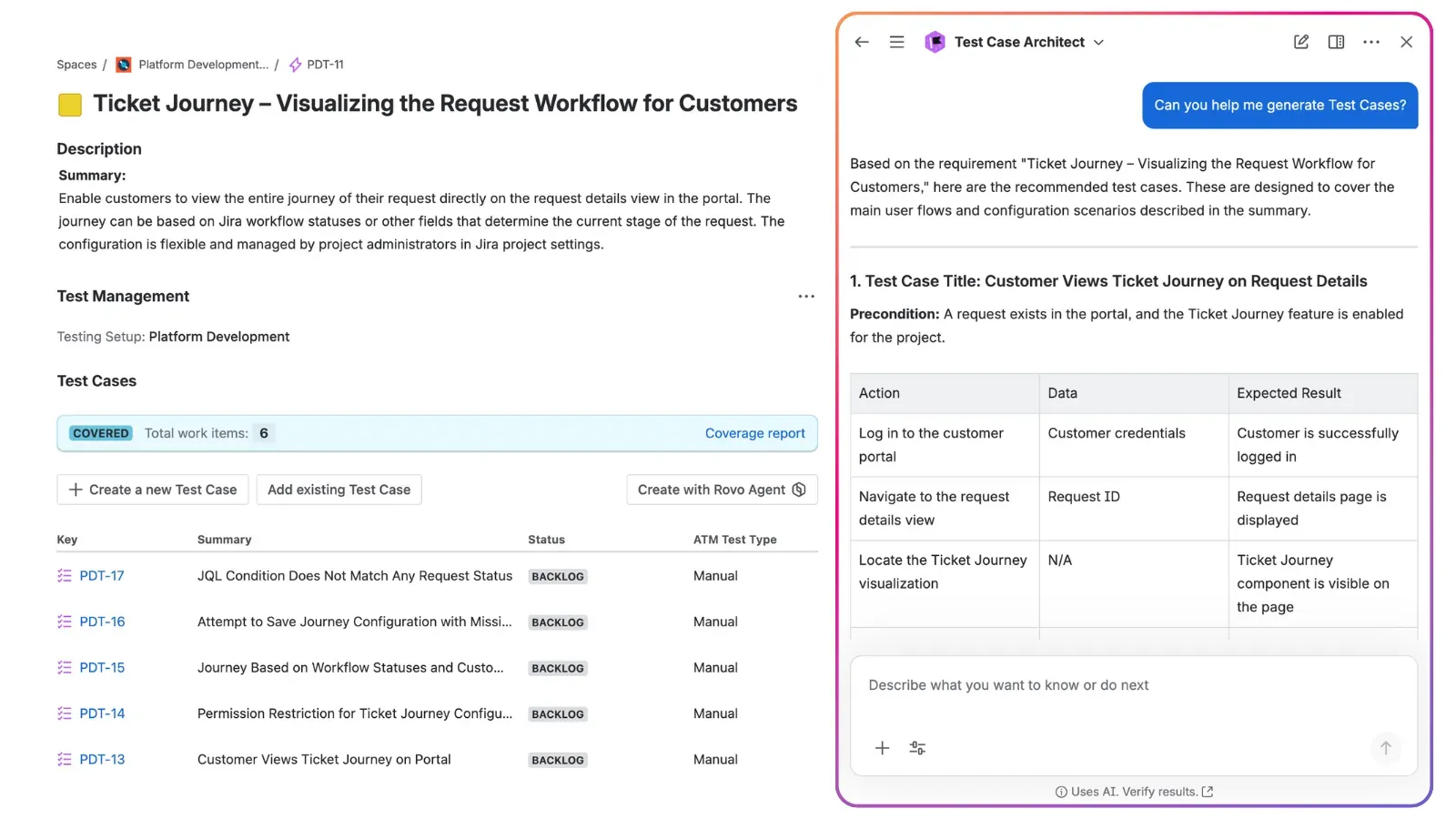
AI-driven test design with the Rovo Agent.
A notable implementation of this technology is the Rovo Agent - Test Case Architect within Appsvio Test Management. This integration establishes a “Chain of Trust” from initial requirements through to quality-assured releases:
- Strategic Test Generation: The agent analyzes the text of a Jira Requirement and suggests relevant, comprehensive test cases.
- Multiple Logic Versions: It suggests various testing scenarios, such as “Happy Path” or “Negative Scenarios,” keeping the human expert in control.
- Actionable Steps: The agent automatically divides cases into clear actions, data, and expected results.
- Native Jira Creation: Because it is built on Forge, the agent creates test cases as native Jira work items, linked back to original requirements without breaching data security.
While AI-driven design handles the structural heavy lifting, the ultimate value of a native testing solution is realized when that data is transformed into a clear, visual map of project health.
Native Clarity: Reporting and Data Analysis
As development velocity picks up, identifying gaps in the process is more important than ever. In 2025, being able to quickly analyze data through Traceability and Coverage Reports became a standard for high-performing teams.
Within Appsvio Test Management, these reports are truly native. By leveraging the Forge platform, ATM ensures reporting data stays within the Jira ecosystem while providing deep, real-time insights:
- Traceability Reports: These provide a holistic view from requirements to verification, helping teams understand the lifecycle and track requirements through to final execution. This process is detailed in From Requirements to Verification: Traceability in Test Management Explained.
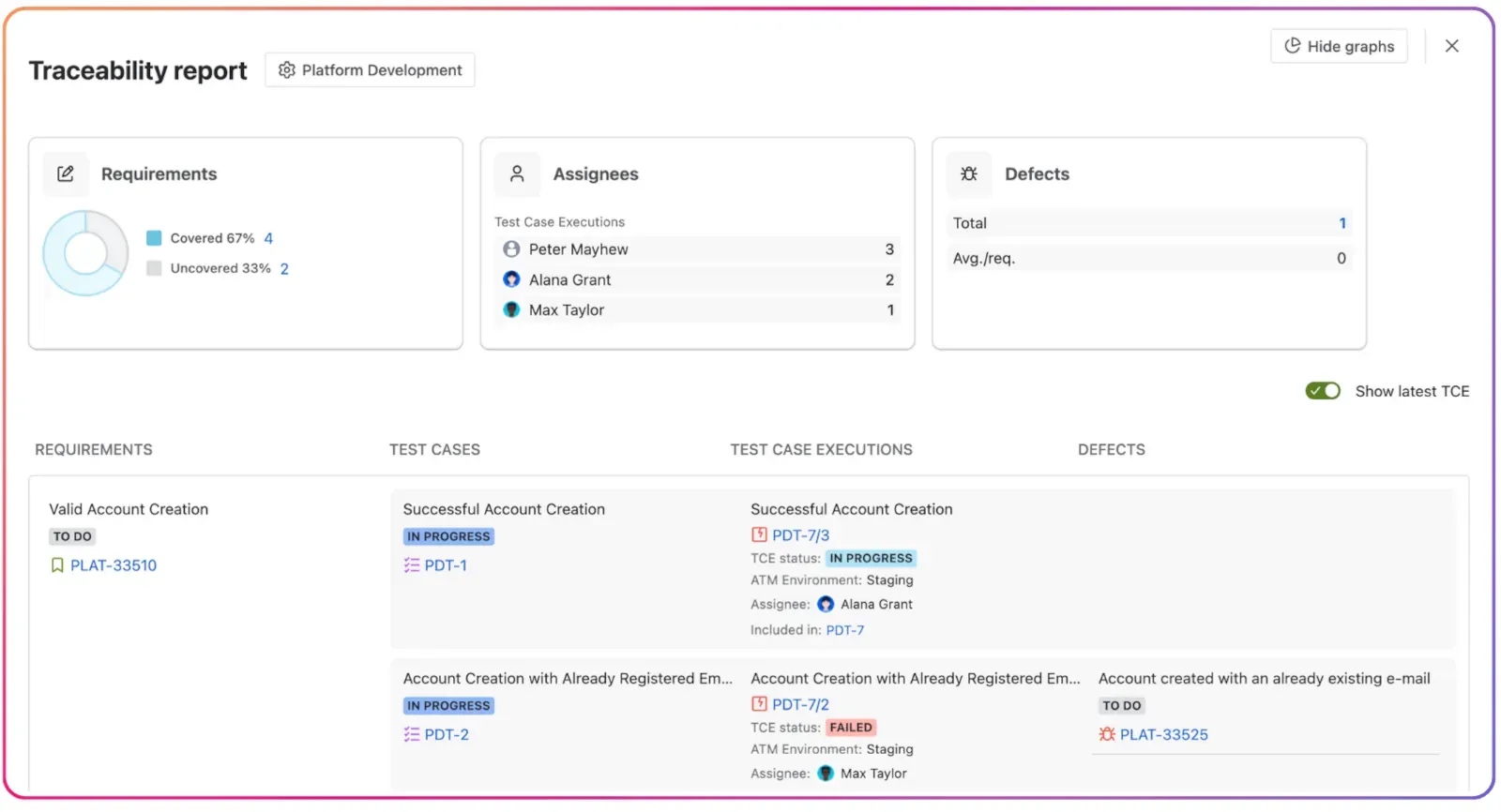
End-to-end traceability from requirements to defects with ATM.
- Test Coverage Reports: These provide visual metrics to identify gaps in testing, ensuring that high-risk areas are never left unvalidated before a release. For those unfamiliar with the concept, What is a Test Coverage Report? provides a comprehensive breakdown.
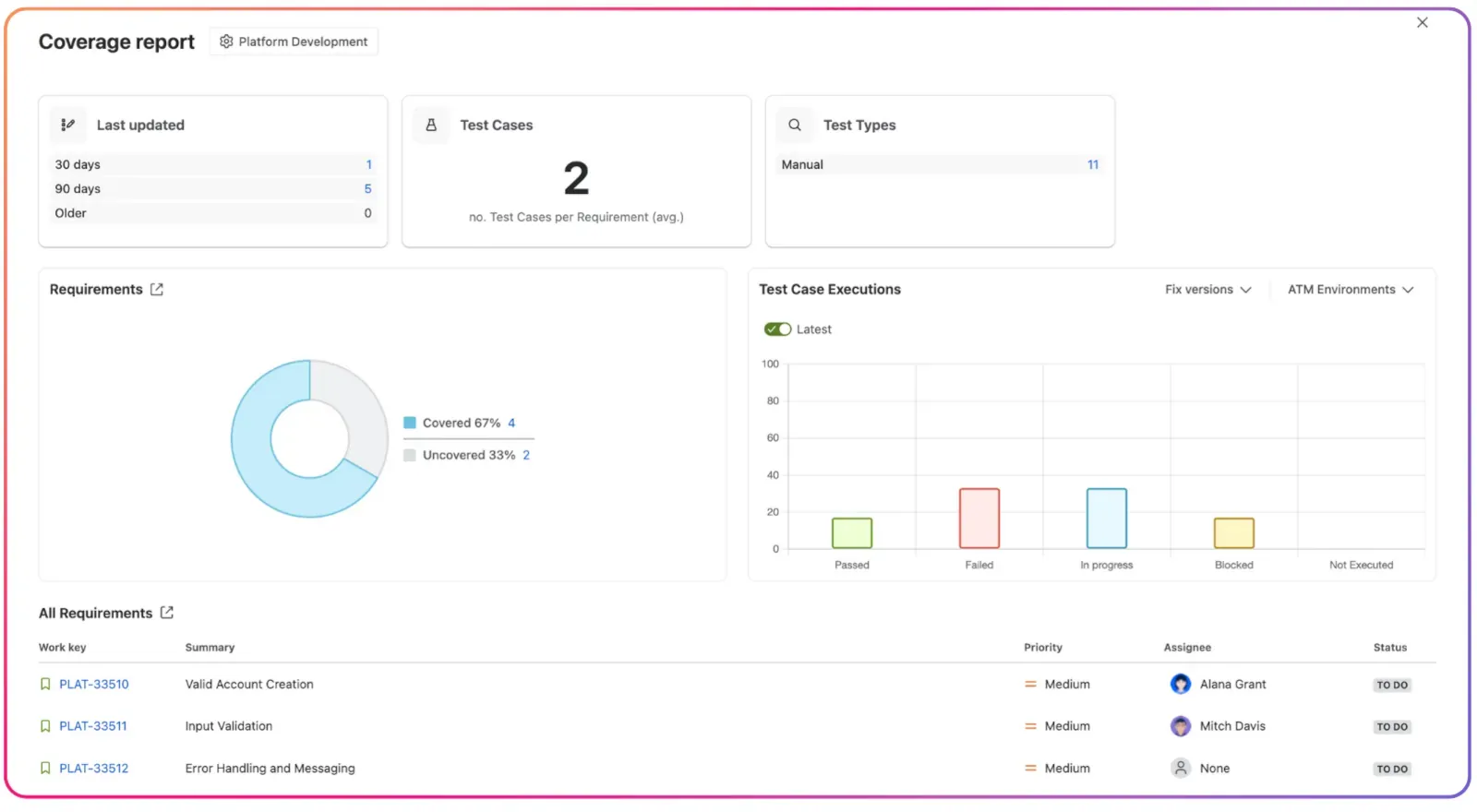
Visualizing testing gaps in real-time with Test Coverage Report in ATM.
Beyond these native reports, organizations are increasingly adopting Observability-Driven Testing (ODT). By integrating Jira with tools like Datadog or New Relic, teams can link production anomalies directly back to the QA cycle. When a bug is detected in production, these systems can suggest which test cases should be added to prevent it from happening again.
This level of insight requires clear reporting. Hence why modern test management must provide:
- End-to-End Traceability: Tracking the lifecycle from requirement to execution to defect.
- Visual Coverage Reports: Identifying which parts of the codebase are untested before they reach production.
- Predictive Analytics: Using historical patterns to forecast which areas of the codebase are most likely to contain errors.
As the paperwork of testing is increasingly handled by AI, the ability to interpret these smart reports becomes the primary skill of the QA lead.
The Interconnected Future of 2026
If 2025 was the year we saw a more resilient engine for quality, then 2026 will be about opening the road to a borderless testing environment. The role of the tester continues to evolve into that of a Quality Strategist, where AI helps beat the paperwork so human experts can focus on high-level strategy and ethical governance.
Tools are constantly evolving to match this shift. For instance, Appsvio Test Management added key features this year like Preconditions, Call Tests for modular test design, and a Sample Project to accelerate the learning curve. Looking ahead to 2026, the roadmap for ATM focuses on connectivity and extension of crucial features:
- Data Import: Prioritizing depth in data migration to support users moving between environments without silos.
- AI-Driven Design: Utilizing the Rovo Test Case Architect to transform requirements into actionable test steps while maintaining full human oversight.
- Structured Execution & Organization: Orchestrating quality through test case versioning, dedicated test plans, and execution iterations, including full support for cross-project testing.
- Integrated Governance: Managing the full lifecycle with a native requirements module and built-in reports for both Traceability and Coverage.
By aligning test management strategies with these innovations, organizations can achieve the speed they need without sacrificing the trust they’ve built. For those looking to experience this native, Forge-based approach firsthand, Appsvio Test Management on the Atlassian Marketplace offers a practical starting point to secure the SDLC and accelerate delivery as we head into 2026.
Related posts
Dariusz Jaroń
•Oct 2, 2026

Dariusz Jaroń
•Sep 23, 2026
Dariusz Jaroń
•Jul 29, 2026