
How to Write a Good Test Case? 2026 Guide for Testers in Jira
Master test case writing in Jira. Learn tips for clear, traceable tests and see how Appsvio Test Management (ATM) uses AI to streamline your QA workflow.

A good test case is like a well-written, detailed recipe - you understand it and follow it without hesitation at each step. Learning how to write a test case is comparable to mastering a signature dish, as it requires the right ingredients, clear instructions, and a systematic approach. This guide will show you how to create a test case that delivers consistent, valuable results every time.
What Makes a Good Test Case Actually Good?
First of all, let’s define a ‘test case’. In a nutshell, it is your detailed instruction manual for testing a specific feature - think of it as a quality insurance policy for your product. To be effective, every test case template must provide clear answers to these essential components:
- Objective: Defines what you are verifying and why it matters to the business. Mastering this is the first step toward traceability from requirements to verification.
- Preconditions: The necessary setup (user roles, data, or configurations) required to prevent “false fails” caused by an unready environment.
- Test Steps: Clear, numbered actions that any team member can follow to ensure the test is executed consistently every time.
- Expected Result: Specific, measurable benchmarks for success, such as a specific URL redirect, rather than vague outcomes like “it works.”
- Pass/Fail Criteria: The defined boundaries that help a tester distinguish between a minor UI glitch and a functional defect.
However, a truly “good” test case is more than just a completed form. In practice, it can be described to be a communication tool between the tester and the developer. To achieve a perfect level of every “talk”, your documentation should also follow these core principles:
- Independent: It can be run on its own without relying on other tests.
- Traceable: It links directly back to a specific requirement or user story.
- Clear: It avoids ambiguity and leaves no room for guesswork.
- Appropriate: It has just enough detail to be effective, but not so much that it’s a maintenance burden.
By treating each test case as a strategic asset rather than an administrative task, you ensure that your testing suite remains robust as the project scales. Although it may seem overwhelming to upkeep these standards manually, you can easily manage these requirements with the right Jira test case management tool.
Why Your Tool Matters for Test Case Design
A modern test management tool enables QA specialists to actively collaborate on security with the entire team, rather than functioning as a separate gatekeeper.” - Konrad Koralewski, QA Specialist at Appsvio
While you can technically manage test cases in Jira using spreadsheets, modern development teams benefit from integrated solutions. A Jira agile test management tool like Appsvio Test Management (ATM) is built directly into Jira. This way, it aligns testing with the rest of your development workflow.
The tools we use influence our habits. If a tool makes traceability difficult, testers often skip it. If it makes updating steps tedious, documentation falls behind. ATM serves as an example of a tool that helps testers create good habits by making the “right” way to test also the easiest way.
Golden Rules of Test Case Design
Writing a high-quality test case is a skill, but even the most experienced testers can be slowed down by rigid or disconnected tools. To bridge the gap between theoretical “best practices” and daily execution, you need an environment that actively supports your workflow.
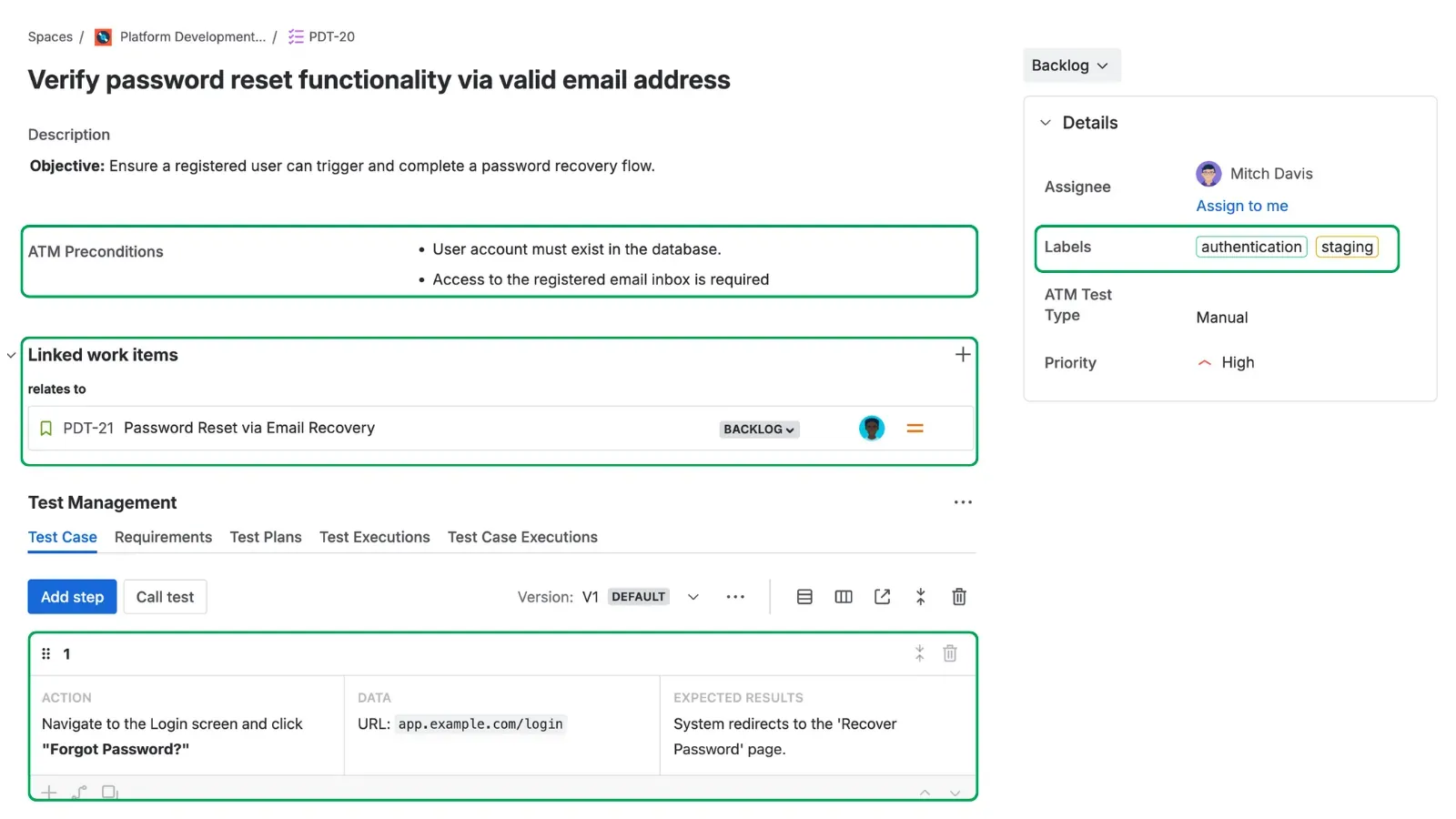
A visual breakdown of essential components that compose a good test case in Jira.
To create test cases in Jira that truly elevate your software quality, you can leverage several key features within ATM that turn complex principles into simple, repeatable actions:
- Maintain Contextual Clarity
A test case is only as good as the requirement it’s testing. Because ATM is native to Jira, testers can see the full history of a user story (comments, attachments, transitions) without leaving Jira. This ensures the test case is designed with the most up-to-date business logic and eliminates the “sync lag” found in external tools.
- Build Auditability and Trust
A “good” test case must be reliable. Test Step Versioning allows you to track exactly what changed and why. If a test starts failing, you can check if a step was modified incorrectly. For beginners, this provides a “Safety to Iterate” - you can refine steps to be more descriptive, knowing you can always revert to a stable version.
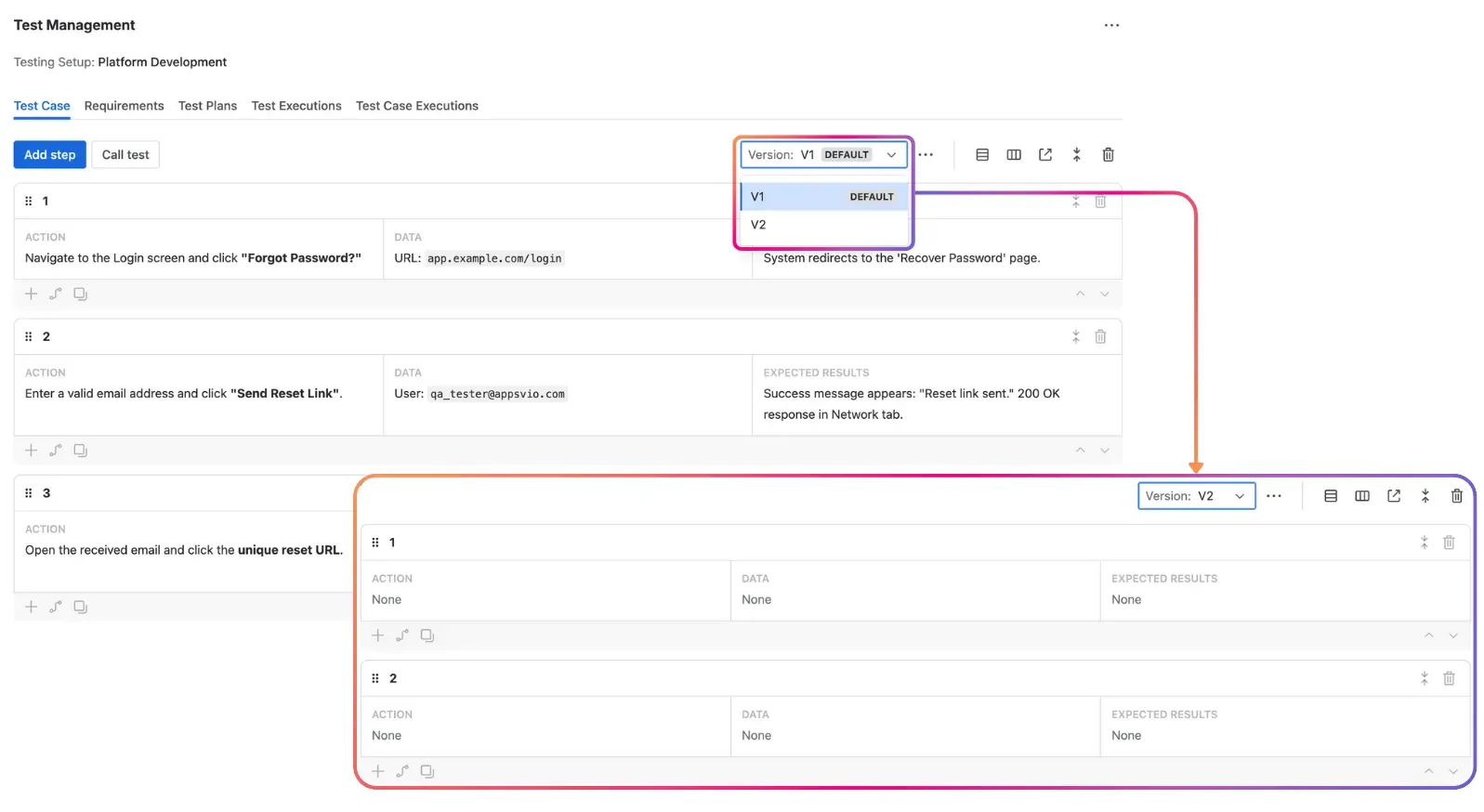
Viewing the detailed change history of individual test steps using ATM’s versioning capability to ensure auditability.
- Optimize for Maintainability
One hallmark of a bad test suite is repetitive “Login” or “Setup” steps. ATM’s Test Call feature allows you to “call” (embed) steps from one test case into another. This promotes the “DRY” (Don’t Repeat Yourself) principle. Update a common flow once, and it reflects everywhere, ensuring consistency across the team.
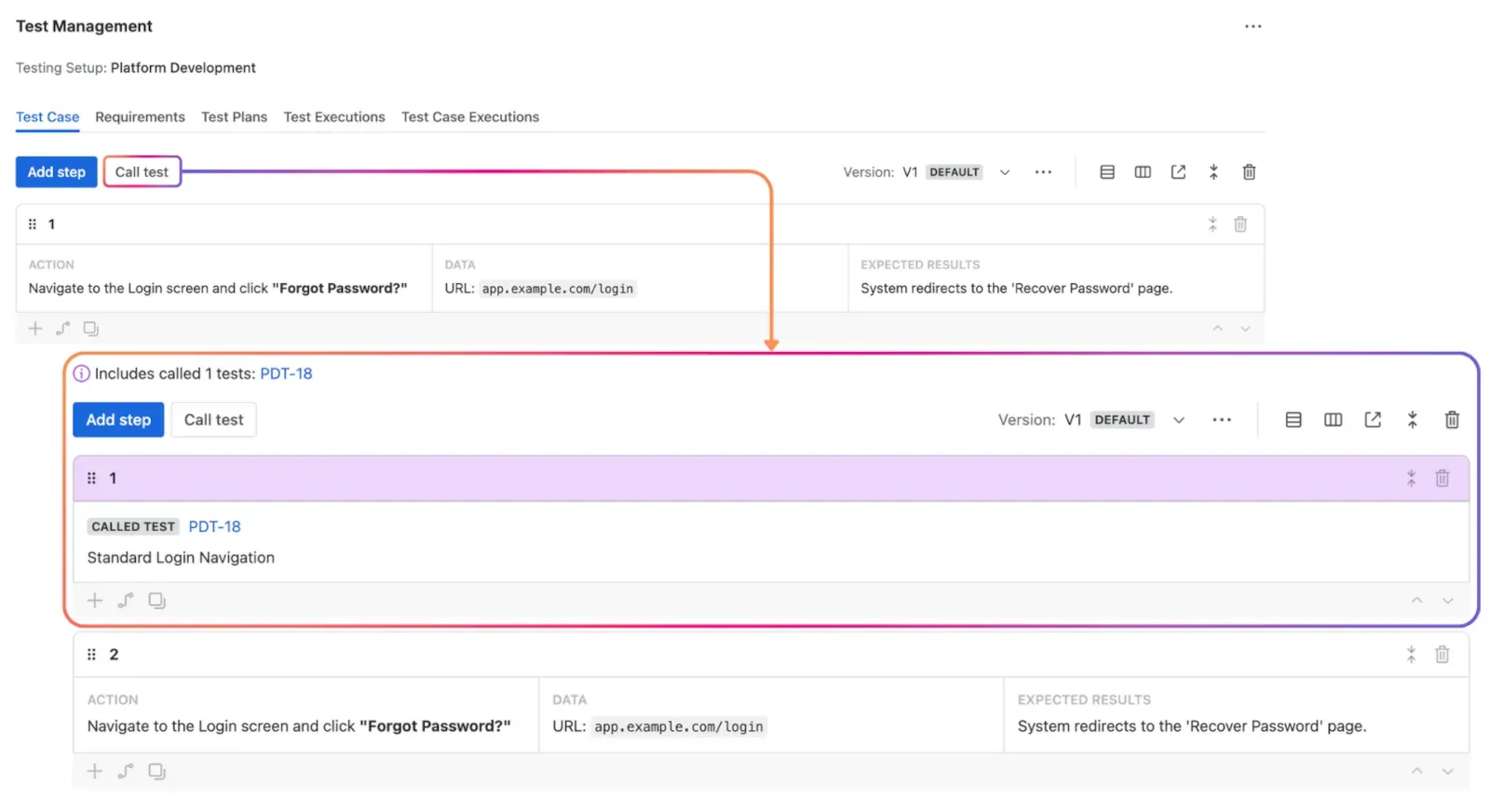
Modular testing: Using the Test Call feature to embed reusable steps, ensuring consistency while eliminating redundancy.
- Ensure Standardized Structure
Many beginners struggle with how to write a step. The Test Case Architect, a Rovo Agent, analyzes requirements and generates a full set of test cases with Action, Data, and Expected Result in seconds. This teaches beginners what a “good” step looks like by example and ensures comprehensive coverage from day one.
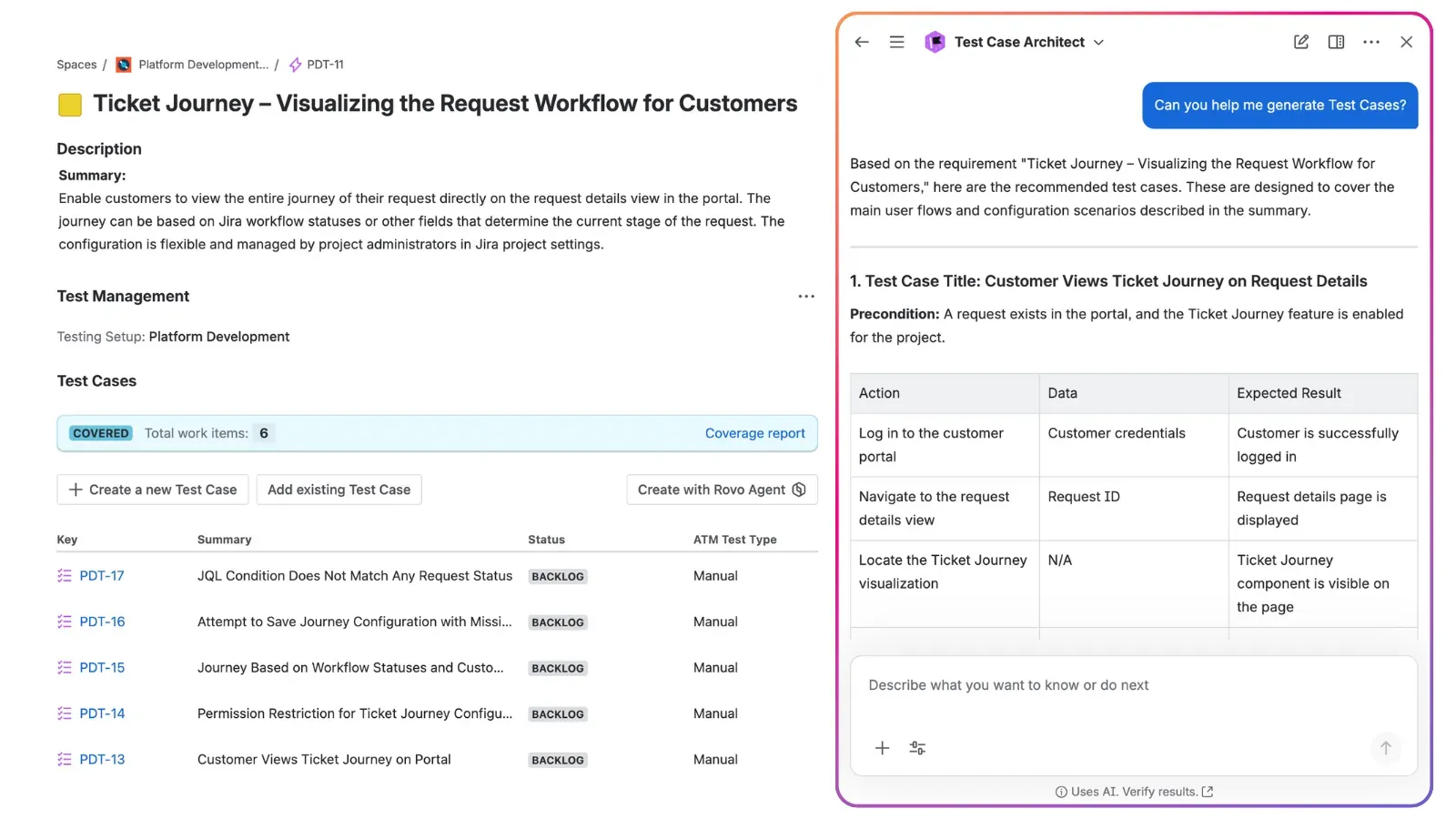
The AI-powered Rovo Agent in ATM automatically generating structured test cases with clear Actions, Data, and Expected Results.
- Practice Purpose-Driven Testing
A test case is only “good” if it serves a purpose. Traceability and Coverage Reports show the relationship between requirements and results. This validates the necessity of your work, ensuring you aren’t writing “orphaned” cases, but rather focusing your energy where the business needs it most.
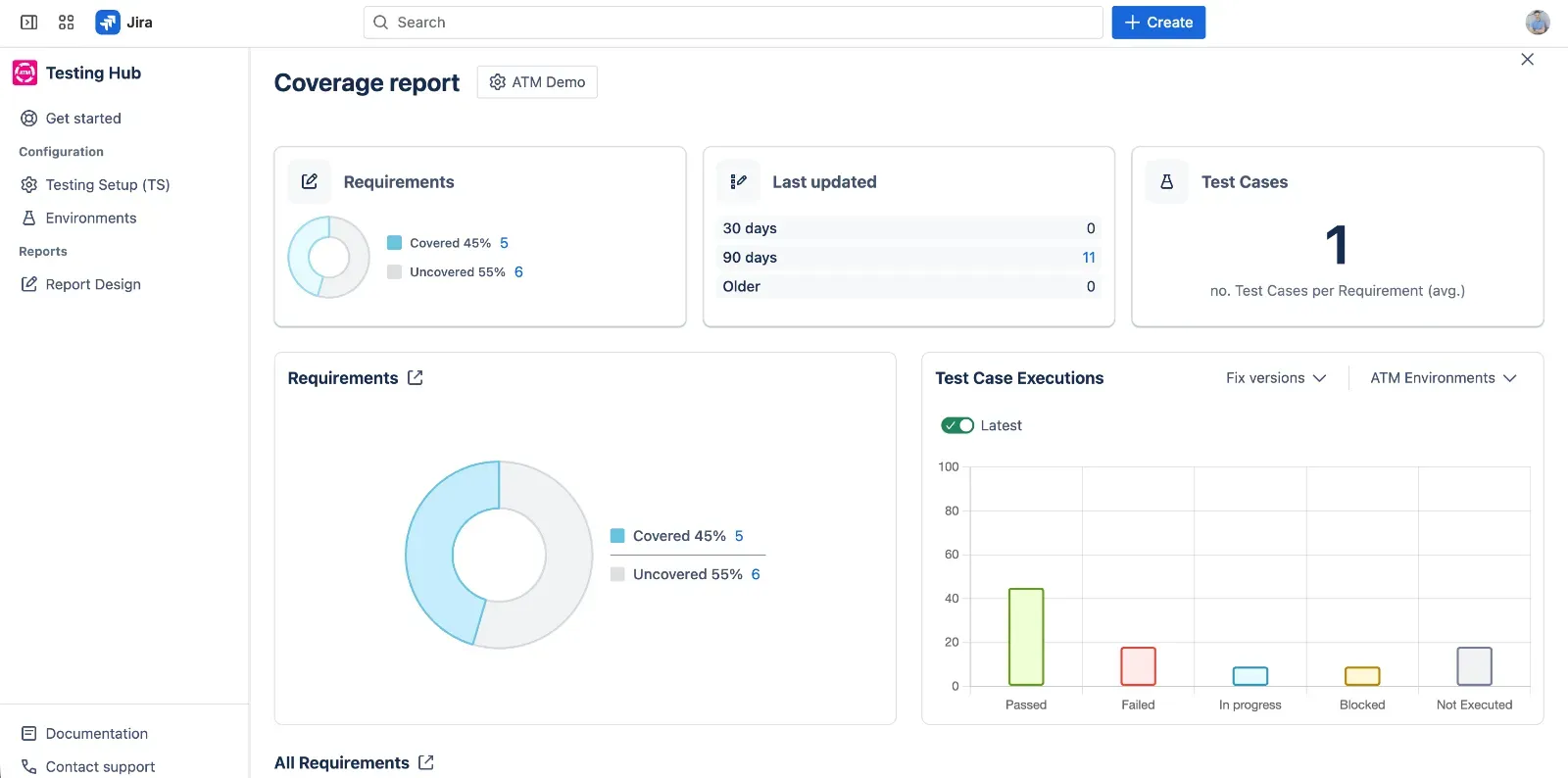
Tracking execution status and identifying untested requirements at a glance to ensure full project quality with Coverage reports.
What Does a Bad Test Case Look Like?
To understand the “good,” we must recognize the “bad.” A poorly designed test case often suffers from being “just a list” rather than a strategic document.
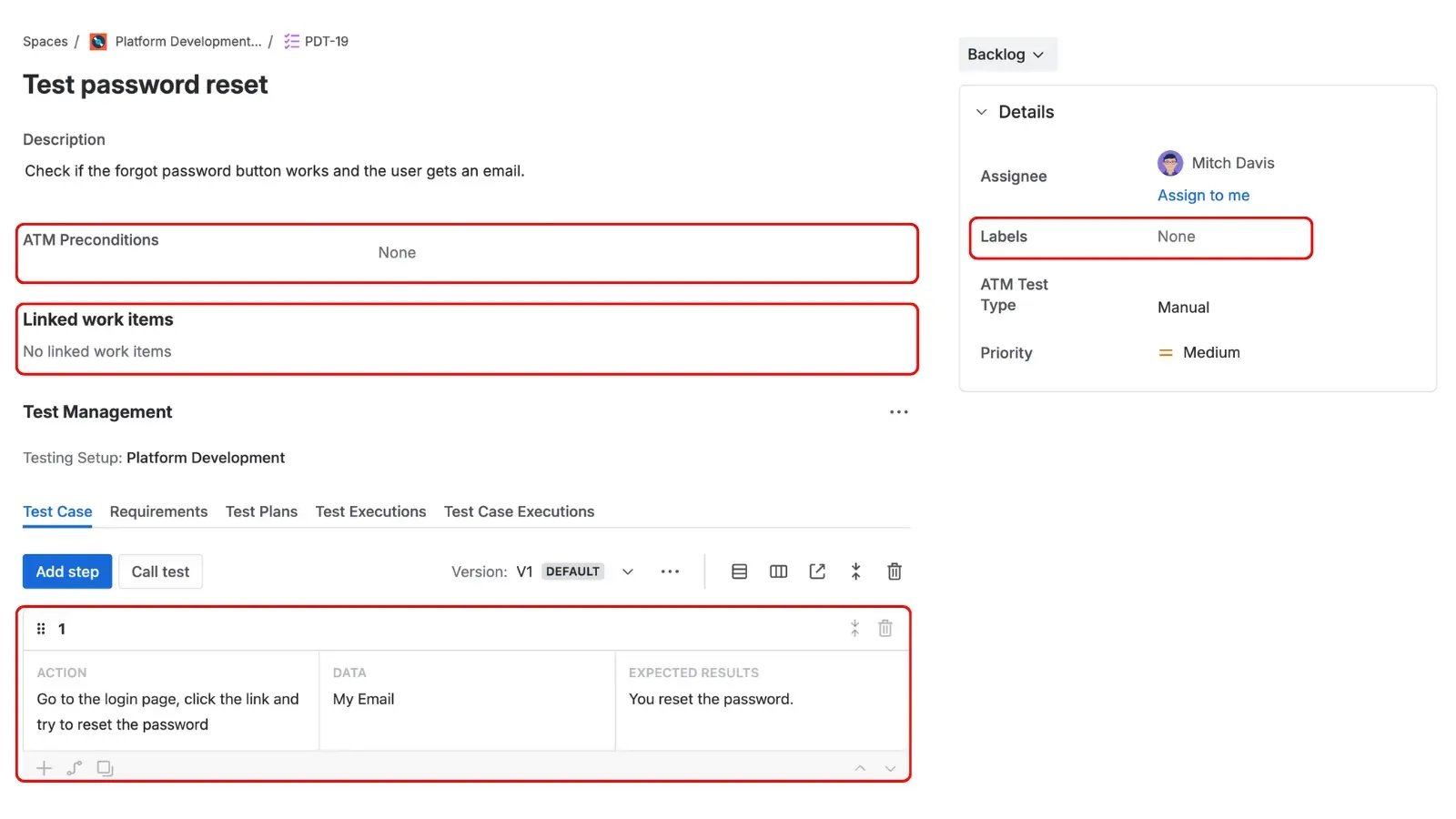
Example of a bad test case.
You’ll recognize a bad test case by these red flags:
- Vague Descriptions: Using phrases like “Check if the button works” instead of “Verify that clicking the ‘Submit’ button triggers a 200 OK response and redirects to the dashboard.”
- Missing Expected Results: Without a clearly defined outcome for every action, the tester is left to guess whether the behavior they see is a feature or a bug.
- Isolation: The test case exists in a vacuum. It isn’t linked to a requirement, making it impossible to tell if the test is even relevant to the current sprint.
- Complexity Overload: Steps that are too long or contain multiple different actions. This makes it impossible to pinpoint exactly where a failure occurred.
When writing test cases in Jira, avoiding these pitfalls is much easier when your tool prompts you for the right information at the right time.
Conclusion: Habits Define Quality
To summarize, writing a good test case is a skill that grows with every sprint - it is simply continuous learning. By focusing on clarity, independence, and traceability, you can create a test suite that not only identifies bugs but also serves as a reliable guide for your entire team.
However, the quality of your work is often a reflection of the environment you work in. The tools we choose play a crucial role in shaping our daily habits; a tool should make it easy to follow the rules of good design, not harder. Appsvio Test Management (ATM) is designed to ensure that these professional standards - like automated traceability and modular design - become second nature rather than a chore.
Remember to keep your test cases up-to-date and leverage the right tools to streamline your process. Check out Appsvio Test Management (ATM) on the Atlassian Marketplace and start building a test suite that works for you.
Ready to Build a Better Test Suite?
Stop fighting spreadsheets and start testing smarter with ATM.
Try it freeThis article was updated on January 19, 2026.
FAQs
Related posts

Dariusz Jaroń
•Oct 2, 2026

Dariusz Jaroń
•Sep 23, 2026

Dariusz Jaroń
•Jul 29, 2026